The price of gasoline is increasing terribly, and it is causing a price increase of other things. The price of crops is also increasing all over the world, and as a result, the poor and starving people are suffering. I've heard that the reason for this is the speculation of crops and oil. This "speculation" is difficult to understand, but it means some companies and individuals are getting a lot of money through the starvation and suffering of poor people, doesn't it? Isn't it evil? Capitalism can do this. There are no rules. People do anything to get money.
The world is worrying about this situation, but they can find no effective ways to change it. Our government seems to have no visions about this problem and is not doing anything to help its people. There seems to be no way to stop this movement or protest it.
My family has a small vegetable garden around our house. When I came to live here, I didn't care about the garden and its crops, but while I was raising my children, I learned about food and farm chemicals. I wanted safe food for my children. Later, I learned that this is a problem not only for our health but also for the environment… for all living things.
Now, my husband grows almost all the crops my family needs, except rice. He uses no farm chemicals, so our crops have to live with weeds and worms. Growing vegetables is hard work, but it's also a lot of fun and joy. He goes to the garden and takes care of the crops almost everyday. When they grow well he seems happy, and when the weather is bad, he worries. In the afternoon before dinner, I walk around our garden and pick some crops while thinking about the dishes for our dinner. I think it's very natural to eat what we can get from our own garden, or from local products. Why do we need to bring food all the way from the other side of the Earth? Why should we have tomatoes in winter? The season's vegetables taste the best. We buy rice from our friend's paddies and get some fish and meat through COOP.
We can live like this because we have a garden and enough time now, fortunately. But it's not enough that only we can get good food. Most of the people have to get food at the stores, and the healthy foods and foods that don't use so much energy and don't pollute the environment should be served to them. Is growing crops for the family a selfish way to live?
No. A few days ago I found the words, "Let's grow crops by ourselves, not to take the food from starving people, not to submit to the countries that have food." I'd like to add one more thing: "not to submit to the evil that makes people starve for money." Why don't you grow vegetables on your verandas and buy local foods?
Wednesday, July 9, 2008

The Problems of Medical Care in Japan

I watched Michel Moore's "Sicko" the other day. It was very interesting. I laughed and was touched, but over the laughter and tears, I saw horrible images. The worth of life was decided by money: how much he/she can pay for insurance. People believe that the United States is the biggest and richest country, and it considers itself as a leader in liberty and democracy. However, in this movie, Americans didn't seem to be enjoying liberty or democracy.
The show was not in a movie theater, but held by people who worry about the problem of medical care in Japan. Japan is following after the policies of the United States with this issue. So, this movie gives us a chance to see what will happen when we go in the same direction as the U.S.
We have a system of health care insurance in Japan, and it covers all the people, either working for companies or not. However, the system has been changed for the worse many times, and now we have to pay 30% of the money needed for the care. The government is trying to decrease the money for the health care, and it causes a lot of serious problems. For example, people have to pay a lot when they go to the hospital, hospitals need more money, doctors and nurses are working too hard, and some hospitals don't have enough doctors. The insurance companies threaten people who are worrying about their health care costs.
A new health care insurance system for the elderly has started recently. Its name begins with the phrase "late elderly," and insurance tax is charged directly from the old-age pension account of everyone over seventy-five years old. It means that the people who live long have to pay a special tax, instead of being celebrated. It is clear that the old people who live with a small pension will face difficulty. All the old people are angry and depressed about this system.
The government of Japan doesn't want to use money for the health care, welfare, and education, though it uses a lot for weapons, building roads, and so on. In short, this is money to benefit big companies and powers. It seems the same as the U.S. What are the people doing about this problem in the U.S? It seems difficult to change the situation because the insurance companies have a lot of money and power. However, making this movie and watching it is to do something about it. In Japan, the Government's party lost the elections of prefectural council members in Yanaguchi and Okinawa. One of the reasons must be the politics of "the health care system for the late elderly." This could be our answer…
Friday, May 16, 2008
I have been to the conference.
I have just been to the "GLOBAL ARTICLE NINE CONFERENCE TO ABOLISH WAR," held on May 4th and 5th in Chiba.
It was a great conference and I am still excited about it. (I was happy to go with my husband, elder son and his wife. My younger son was attending as a staff member.)
At the conference, we could hear speeches and talks by people who are working for peace in many areas of the world . Some of them were Nobel Peace Prize Laureates . Their words were so powerful and impressive because they are really acting and they know the truth.
The most impressive scene for me was the session about the Iraq War. There on the stage were an American who went to Iraq as a soldier and a Iraqi young man who was a former soldier of the Iraqi Republican Guard. The American left Iraq as a conscientious objector after he found what was going on in Iraq, especially at Abu Ghraib prison. The Iraqi man expected peace after Iraq's defeat, but the US army kept occupying his country and the conditions got worse. His family members and friends were killed during the occupation, but he is acting as a humanitarian aid worker, not with guns. I could feel his sorrow through his voice, and while he was talking, the American young man was gazing at and listening to him sincerely. And, at the same table, there was a Japanese woman who has been working as a Japan/Iraq aid volunteer. Each one of them said, " Weapons cannot make peace."
On the first page of the program, this is written:
"Throughout the world, wars are still being waged and weapons are still being produced, with no end in sight. Drastic changes in the earth's environment threaten the lives of millions, and poverty is rampant. Faced with such a world, global citizens have started to realize the importance of Article 9 of the Japanese Constitution.
'To build peace without force'
This is the concept of article 9 that we want to ring throughtout the world. "
Cora Weise, an American woman who is working for International Peace Bureau said, "Now is the time to abolish war. The 'www' we are using for the Internet is not 'world wide web' , but ' world without war '."
Peace activists from overseas said, "We see Article 9 as a hope for the world. Article 9 is an issue not only for Japan, but for all the world. Every nation should have Article 9 in its constitution."
The call to "Change the Constitution! Delete Article 9! " is loud and strong from the LDP, right wing, and the USA as they prepare this kind of legislation. As people who believe in the importance of Article 9, we sometimes feel like a minority in Japan. It has been difficult to stop the movement. But we could have hope through this conference, with the fact that too many people went to the conference to enter the big hall, and with the recent poll stating that the majority(more than 60%) want to keep Article 9.
The situation is not easy. Many young people can't find good jobs and they don't have hope for the future, so they are easily recruited for the army (SDF). However, issues of peace and war should be the most important for young people.
I wish we could work together to make a beautiful world without weapons and wars.
Thank you for reading.
It was a great conference and I am still excited about it. (I was happy to go with my husband, elder son and his wife. My younger son was attending as a staff member.)
At the conference, we could hear speeches and talks by people who are working for peace in many areas of the world . Some of them were Nobel Peace Prize Laureates . Their words were so powerful and impressive because they are really acting and they know the truth.
The most impressive scene for me was the session about the Iraq War. There on the stage were an American who went to Iraq as a soldier and a Iraqi young man who was a former soldier of the Iraqi Republican Guard. The American left Iraq as a conscientious objector after he found what was going on in Iraq, especially at Abu Ghraib prison. The Iraqi man expected peace after Iraq's defeat, but the US army kept occupying his country and the conditions got worse. His family members and friends were killed during the occupation, but he is acting as a humanitarian aid worker, not with guns. I could feel his sorrow through his voice, and while he was talking, the American young man was gazing at and listening to him sincerely. And, at the same table, there was a Japanese woman who has been working as a Japan/Iraq aid volunteer. Each one of them said, " Weapons cannot make peace."
On the first page of the program, this is written:
"Throughout the world, wars are still being waged and weapons are still being produced, with no end in sight. Drastic changes in the earth's environment threaten the lives of millions, and poverty is rampant. Faced with such a world, global citizens have started to realize the importance of Article 9 of the Japanese Constitution.
'To build peace without force'
This is the concept of article 9 that we want to ring throughtout the world. "
Cora Weise, an American woman who is working for International Peace Bureau said, "Now is the time to abolish war. The 'www' we are using for the Internet is not 'world wide web' , but ' world without war '."
Peace activists from overseas said, "We see Article 9 as a hope for the world. Article 9 is an issue not only for Japan, but for all the world. Every nation should have Article 9 in its constitution."
The call to "Change the Constitution! Delete Article 9! " is loud and strong from the LDP, right wing, and the USA as they prepare this kind of legislation. As people who believe in the importance of Article 9, we sometimes feel like a minority in Japan. It has been difficult to stop the movement. But we could have hope through this conference, with the fact that too many people went to the conference to enter the big hall, and with the recent poll stating that the majority(more than 60%) want to keep Article 9.
The situation is not easy. Many young people can't find good jobs and they don't have hope for the future, so they are easily recruited for the army (SDF). However, issues of peace and war should be the most important for young people.
I wish we could work together to make a beautiful world without weapons and wars.
Thank you for reading.
Tuesday, April 22, 2008
Article 9 of the constitution of Japan

Did you read the news about the judgement of the court about sending SDF troops to Iraq? The judgement says that it is in violation of Article 9 of Japan's constitution. Everyone has known it is a violation, but no other court has made this kind of judgement (or the judges avoided refering to the constitution, especially Article 9...). So, it's a remarkable and important judgement, we think. Many of the people I saw today were glad and excited about the judgement.
Have you ever read Article 9 of the constitution of Japan?
"Aspiring sincerely to an international peace based on justice and order, the Japanese people forever renounce war as a sovereign right of the nation and the threat or use of force as means of settling
international disputes. In order to accomplish the aim of the proceeding paragraph, land, sea, and air forces as well as other war potencial, will never be maintained. The right of belligerency of the state will not be recognized."
(from " Nihonkoku kenpou" by Syogakukan)
Most of us, Japanese people, are regretful of World War II. We also remember how we suffered from the war, and so, we have always thought the idea of Article 9 is very important. We want to keep article 9, renounce weapons, and never enter wars again. The matter is not simple, but Japan has not killed anyone in battle during the last 62 years, and it is because we have this article.
From the beginning, there have been people who don't want to accept article 9. Year by year, their power and voice, mainly of the Rightists and conservative politicians, are becoming bigger and louder. They have been preparing to change the constitution, to make Japan a country that can enter wars and attack other countries with its force again. As you know, we have the Self Defence Force, which is one of the biggest forces in the world and always cooperating with the U.S. forces. Our government has explained that it isn't a force, but who believes it? The court of Japan, especially the supreme court hasn't given a judgement that its activities are against the constitution.
What do you think of the philosophy of Article 9? Is it just a dream? Don't you find the same philosophy in John Lennon's "IMAGINE?" He says, " Imagine all the people living life in peace. You may say I'm a dreamer, but I'm not the only one, I hope some day you'll join us, and the world will be as one." There is a network to protect Article 9 in our constitution, and members all over Japan are supporting it. The situation is not easy, but I found one hope:
Do you know about the "GLOBAL ARTICLE NINE CONFERENCE TO ABOLISH WAR" on May 4-6th? There is almost no information about it on TV or newspapaers(WHY?), and I was informed by my son. My family is planning to join it as a golden week trip, and I'm excited that such a big event about peace will be held. Yes, the philosophy of Article 9 is not only for Japan, but also for the people all over the world, many people have realized it. When we try to make the idea of the article come true, we may be able to change this world filled with violence and disclimination. And, when the value of article 9 is known worldwide, we can have more confidence and power to act to protect it.
2008/4/22
Have you ever read Article 9 of the constitution of Japan?
"Aspiring sincerely to an international peace based on justice and order, the Japanese people forever renounce war as a sovereign right of the nation and the threat or use of force as means of settling
international disputes. In order to accomplish the aim of the proceeding paragraph, land, sea, and air forces as well as other war potencial, will never be maintained. The right of belligerency of the state will not be recognized."
(from " Nihonkoku kenpou" by Syogakukan)
Most of us, Japanese people, are regretful of World War II. We also remember how we suffered from the war, and so, we have always thought the idea of Article 9 is very important. We want to keep article 9, renounce weapons, and never enter wars again. The matter is not simple, but Japan has not killed anyone in battle during the last 62 years, and it is because we have this article.
From the beginning, there have been people who don't want to accept article 9. Year by year, their power and voice, mainly of the Rightists and conservative politicians, are becoming bigger and louder. They have been preparing to change the constitution, to make Japan a country that can enter wars and attack other countries with its force again. As you know, we have the Self Defence Force, which is one of the biggest forces in the world and always cooperating with the U.S. forces. Our government has explained that it isn't a force, but who believes it? The court of Japan, especially the supreme court hasn't given a judgement that its activities are against the constitution.
What do you think of the philosophy of Article 9? Is it just a dream? Don't you find the same philosophy in John Lennon's "IMAGINE?" He says, " Imagine all the people living life in peace. You may say I'm a dreamer, but I'm not the only one, I hope some day you'll join us, and the world will be as one." There is a network to protect Article 9 in our constitution, and members all over Japan are supporting it. The situation is not easy, but I found one hope:
Do you
 know about the "GLOBAL ARTICLE NINE CONFERENCE TO ABOLISH WAR" on May 4-6th? There is almost no information about it on TV or newspapaers(WHY?), and I was informed by my son. My family is planning to join it as a golden week trip, and I'm excited that such a big event about peace will be held. Yes, the philosophy of Article 9 is not only for Japan, but also for the people all over the world, many people have realized it. When we try to make the idea of the article come true, we may be able to change this world filled with violence and disclimination. And, when the value of article 9 is known worldwide, we can have more confidence and power to act to protect it.
2008/4/22
Friday, April 11, 2008
CHERRY BLOSSOM ENTHUSIASM

CHERRY BLOSSOM ENTHUSIASM
THE SEASON IS COMING
THE SEASON IS COMING
I saw a picture of cherry blossoms in Matsumoto in the newspaper yesterday. But they're not yet here in Saku. This is one of the last places to see cherry blossoms, and it makes me displeased or irritated in this season every year... Every day I walk around in my garden and check the cherry trees. "How are you this year? I'm really waiting for you!" I speak to them, but the buds are still small and hard. Anyway, they will bloom in ten days or so, and I'm already excited!
You must be surprised to see the cherry blossom forecast, (when the blossoms will bloom in the area), on TV or papers. Yes, we are excited about the cherry blossoms in this season. Why are the cherry blossoms special for us? One reason is that they are the symbol of spring, they tell us that spring has come. But it's not enough, I think . We love their color, their shape, their fragrance, their short life, and so on... When we say just "hana (flower or blossom)" in Japanese poems or literature, it means cherry blossoms. "Hanami" means going to watch the cherry blossoms.
"Hanami" doesn't mean just watching blossoms, but also having a picnic under the blossoms. You will find people eating and drinking (a lot!) under the blossoms. We have a saying, "Hana yori dango." It means, "food is better,or more important, than blossoms." Yes, some people are doing "hanami" without watching blossoms. But isn't it wonderful to have a picnic under the beautiful cherry blossoms? So, a lot of families and friends go out to enjoy the blossoms, and they are a happy sight.
WHERE TO GO FOR HANAMI?
You must be surprised to see the cherry blossom forecast, (when the blossoms will bloom in the area), on TV or papers. Yes, we are excited about the cherry blossoms in this season. Why are the cherry blossoms special for us? One reason is that they are the symbol of spring, they tell us that spring has come. But it's not enough, I think . We love their color, their shape, their fragrance, their short life, and so on... When we say just "hana (flower or blossom)" in Japanese poems or literature, it means cherry blossoms. "Hanami" means going to watch the cherry blossoms.
"Hanami" doesn't mean just watching blossoms, but also having a picnic under the blossoms. You will find people eating and drinking (a lot!) under the blossoms. We have a saying, "Hana yori dango." It means, "food is better,or more important, than blossoms." Yes, some people are doing "hanami" without watching blossoms. But isn't it wonderful to have a picnic under the beautiful cherry blossoms? So, a lot of families and friends go out to enjoy the blossoms, and they are a happy sight.
WHERE TO GO FOR HANAMI?

Park in In Nagano, there are many places that are famous for cherry blossoms. For example, Takato Town in the Ina area, Matsumoto Castle, JouyamaNagano City, Ueda Castle, or Komoro Kaikoen. But you don't necessarily have to go those places, I think. We Japanese people love cherry blossoms so much, and so we plant cherry trees everywhere: in the gardens of temples or shrines, around school yards, parks and other public buildings, on the banks of the rivers or ponds, and along the roads. Ask your Japanese friends where to go, and they will tell you or take you to a good place, I believe. Or, walk around your area and find your favorite place. I usually visit some places to enjoy the blossoms. They are Kaikoen in Komoro City, Nagano Bokujo in Saku City, one small road side near my house and some school yards in Mochizuki. Did you know that KomoroHigashi JHS has big old cherry trees along the gate way, and the students walk through an amazing pink tunnel into the school building?!
FUN with CHERRY BLOSSOMS
FUN with CHERRY BLOSSOMS
Do you know that there are many kinds of cherry blossoms? In January, I went to Izu to see kawazusakura, which is the earliest cherry blossom to bloom. In  May, we can enjoy mountain cherry blossoms among the young leaves of other trees. Sakuramochi, mochi wrapped with a cherry leaf is a popular sweet in this season. Some people enjoy cherry blossom tea. You will find the color and the shape of cherry blossoms everywhere in this season. Oh, I'm really waiting for the blossoms, but it was a cold rainy day today....
 May, we can enjoy mountain cherry blossoms among the young leaves of other trees. Sakuramochi, mochi wrapped with a cherry leaf is a popular sweet in this season. Some people enjoy cherry blossom tea. You will find the color and the shape of cherry blossoms everywhere in this season. Oh, I'm really waiting for the blossoms, but it was a cold rainy day today....
 Monday, March 24, 2008

ENVIRONMENTAL ISSUES IN NAGANO

Nagano has enough water for us to use, most from springs and from underground, and some from rivers or dams. According to the homepage of the Saku Water Department, all of the water served in the Saku area is from underground or from springs. (I didn't know that.) So, there is no purification tank except one in Miyota. They just add chlorine to disinfect the water. ( We sometimes smell it! ) Here in Nagano we are blessed with clean water, but there are many places or families without good sewer systems. We should be more careful not to pollute the water as it goes to the other cities and seas! Farm chemicals, industrial wastes and detergent pollute the water. I use soap for laundry and my dishwasher uses salt instead of detergent. When we see huge piles of detergents in stores and shops, our small effort doesn't seem to make a difference, but more people care about it than before and the rivers are getting cleaner than before. Around my house, we can see a lot of fireflies, which disappeared some thirty years ago...They came back as the river running near my house got clean again.
As you know, we buy plastic bags for garbage. In other words, we are charged a fee for garbage disposal. We separate garbage according to the type. Some are burnt, some are recycled, and some are buried. The system seems to be working well, but I'm not sure if things are really recycled, if the buried wastes don't pollute the ground and water, or if the smoke and ash from the incinerators are safe. We can be happy when dirty things disappear from our houses, but they can't disappear from the Earth...We usually don't know where (and how) they go. I once watched a TV show that said the waste or used machines brought from other countries were taken apart and recycled in developing countries in Asia. People were working without knowing how dangerous it was. I feel guilty that other people are suffering while we are enjoying life using a lot of things and throwing away those we don't want. It is difficult to opt-out of this system, but I'm trying some small things.

When Abby used her own chopsticks at a restaurant, I felt so ashamed. Yes, in Japan buy and use too much wood. I have heard that Japanese companies go and cut too many trees in developing countries. How can we reduce the use of waribashi? I have been to a restaurant that uses bamboo waribashi, which is better.

Nagano-ken is a place people visit to enjoy nature. We have mountains, lakes, rivers, and forests, as you know. When I was young, urban life looked so cool to me, but now I feel happy to live in Nagano--except for the cold in winter. Whenever I go to Tokyo I feel dizzy and get tired from the crowds. However, we still have environmental problems in Nagano. Around Sakudaira Station you find a lot of buildings like cardboard boxes. It was a beautiful rice field ten years ago, but now it's an ugly town. Artificial things like buildings, streets, ad boards, and electric wires are increasing like spider's webs and are disturbing the views. Of course, it's not only a problem of the view, but also a big problem for the environment. Rice paddies work as dams that control water. Rice fields moderate the climate. And, of course, they produce our basic food. Abby said that many of you are interested in environmental problems and want to get information about these issues. I don't think I know enough, but I'll try to report some environmental problems here in Nagano.
WATER
Nagano has enough water for us to use, most from springs and from underground, and some from rivers or dams. According to the homepage of the Saku Water Department, all of the water served in the Saku area is from underground or from springs. (I didn't know that.) So, there is no purification tank except one in Miyota. They just add chlorine to disinfect the water. ( We sometimes smell it! ) Here in Nagano we are blessed with clean water, but there are many places or families without good sewer systems. We should be more careful not to pollute
 the water as it goes to the other cities and seas! Farm chemicals, industrial wastes and detergent pollute the water. I use soap for laundry and my dishwasher uses salt instead of detergent. When we see huge piles of detergents in stores and shops, our small effort doesn't seem to make a difference, but more people care about it than before and the rivers are getting cleaner than before. Around my house, we can see a lot of fireflies, which disappeared some thirty years ago...They came back as the river running near my house got clean again.
REFUSE or GARBAGE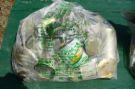

As you know, we buy plastic bags for garbage. In other words, we are charged a fee for garbage disposal. We separate garbage according to the type. Some are burnt, some are recycled, and some are buried. The system seems to be working well, but I'm not sure if things are really recycled, if the buried wastes don't pollute the ground and water, or if the smoke and ash from the incinerators are safe. We can be happy when dirty things disappear from our houses, but they can't disappear from the Earth...We usually don't know where (and how) they go. I once watched a TV show that said the waste or used machines brought from other countries were taken apart and recycled in developing countries in Asia. People were working without knowing how dangerous it was. I feel guilty that other people are suffering while we are enjoying life using a lot of things and throwing away those we don't want. It is difficult to opt-out of this system, but I'm trying some small things.
1. Composting the garbage from our kitchen. We throw the garbage into a composting bucket in the yard. You can't do it in your apartment house, but you can dry the garbage in the sun, then it weighs much less.
2. Shopping with my own bag. Some supermarkets discount two or three yen when we don't use plastic bags.
3. Not going shopping. (This is difficult, but if I won't go shopping, I won't buy useless things. haha...)
4. Use things as long as I can. (This is also difficult. I bought a new car though my old car had no problems. )
5. Repairing and reusing. My husband often repairs furniture himself, and we use many things that he repaired. (He bought many different kinds of machines and tools for the work and I don't know how much they cost!!)
6. Refuse too much wrapping while shopping. But as you know, we wrap too much and when we buy one orange, we have to buy one plastic bag...Oh, how difficult to reduce our trash!
FOOD
As you know, we have every kind of food from all over the world in the supermarkets. However, only 30% of our food is the product of our country. Most of the feed for cows and chickens is imported. It is a very dangerous condition, I think. Japan had the ability to feed all of its people, but the government has not protected our agriculture and fisheries. Consumers have welcomed cheaper food. You know the problem about food made in China, don't you? These days more and more people want safer food, and some farmers also want to grow safer vegetables. I know a farmer in my town who has tried organic farming and sends a box of his vegetables with a letter to his costumers every week. Some people think it's good to use local products so we can know about it better and we don't have to use the energy to bring it from far away. Where can we get local products? There are some small shops that sell them. If you can't find one, go to a JA (Japan Agricultural co-op) shop, which probably sells its members' products. I am a member of a group that makes miso from local soybeans and rice. Families in the villages worked together to make miso before, but now most families buy it. Most of the soybeans we eat in Japan now are from abroad, and so it is difficult to find miso or tofu made from locally-produced beans.

WARIBASHI and WOOD
When Abby used her own chopsticks at a restaurant, I felt so ashamed. Yes, in Japan buy and use too much wood. I have heard that Japanese companies go and cut too many trees in developing countries. How can we reduce the use of waribashi? I have been to a restaurant that uses bamboo waribashi, which is better.
ENERGY PROBLEM
Big cities use a lot of energy, but we, the people in Nagano, probably use more as individuals. They use public transport i n Tokyo, but here in Nagano we can't live without cars. We tried to reduce our cars in my family, but we couldn't. We have four cars, one for each adult! We usually have bigger houses and have to warm them during the cold winter. Every family has a big bathtub and we have a custom to take a bath every day. How can we reduce our energy usage? Some houses have machines to warm water using solar heat on the roof. We also have a solar power station on our roof. In Japan, much of the electricity is from nuclear power plants, and it is a very dangerous way to get energy, I think.
 n Tokyo, but here in Nagano we can't live without cars. We tried to reduce our cars in my family, but we couldn't. We have four cars, one for each adult! We usually have bigger houses and have to warm them during the cold winter. Every family has a big bathtub and we have a custom to take a bath every day. How can we reduce our energy usage? Some houses have machines to warm water using solar heat on the roof. We also have a solar power station on our roof. In Japan, much of the electricity is from nuclear power plants, and it is a very dangerous way to get energy, I think.
I watched the movie "The Earth" today. It shows us how beautiful and wonderful the Earth is and warns us that we are destroying it. Shall we think about it together?
Sunday, March 2, 2008
Do You Like Reading?
Do You Like Reading?
Do you read Japanese books? Do you have any favorite Japanese authors? When I ask young foreigners these questions, their answers are always "Murakami Haruki." I have read some of his books, but I didn't enjoy them at all. And, I know few people who like his books. A young librarian at the city library said that his books are not popular except two or three, and she doesn't like him. I don't understand why encyclopedias say he is popular among young people, or he is so highly esteemed among foreign people. Within Japan, it doesn't seem to be the case.
Besides Murakami, there are good authors and interesting books in Japan. In this essay I would like to recommend some of them to you. Most of them are popular and easy to read, but I'm not sure if you can find their books translated into English...I'd be very happy if you read and liked these authors.
1 Natsume Soseki (1867-1916)


He is one of the most famous authers in Japan, and his face was once printed on a 1000 yen bill. He wrote haiku (Japanese short poem) and some serious books but his early two books are written with humor. His style of telling stories is articulate.
* Bottyan A story of a young man who goes to Shikoku to teach at a school He is short-tempered, but honest and so he has been loved by the readers.
* I Am a Cat The story is told by a cat with no name , who watches the people around him.
2 Miyazawa Kenji (1896-1933)
He was born and lived in Iwate, a northern area of Japan, where farmers were suffering in the severe weather. He taught at an agricultural school, then worked as an adviser of farming. He wrote poems and stories for children. But I could understand and enjoy his works only after I matured. They show his deep sympathy with farmers or weak creatures, his knowledge about nature, a nd his view of the universe. His works were not known , but after his death people found the beauty of his works.
 nd his view of the universe. His works were not known , but after his death people found the beauty of his works.
 * Night of the Galaxy Railroad (or The Milkyway Railroad) A lonely boy travels on a train running through the stars. He sees many people there, and one of them is his classmate who he believes in. You can find a well made animation film of this story.
* A Restaurant With Many Orders
* Nametokoyama no Kuma (A Bear of Mt. Nametoko)
* Amenimo makezu his most famous poem

3 Matsumoto Seityou (1909-1992)
He wrote a lot of mystery stories, which describe not only crimes but also human beings and the society. He also investigated the modern history of Japan.
* Ten to Sen (Point And Line)
* Suna no Utuwa (A Vessel of Sand)
* Showa-shi Hakkutsu (Excavation for the History of Showa)
He wrote many stories of the people in the Edo era, The people in his stories don't have  powers, but they are nice and proud, and live simple and sincere lives. His style is very beautiful Japanese, I think.
* Twilight Samurai
 powers, but they are nice and proud, and live simple and sincere lives. His style is very beautiful Japanese, I think.
* Twilight Samurai
* Bamboo Sword
* Hidden Blade You can find the movies of them.
5 Asada Jiro (1951-)

He is one of the most popular writers now in Japan. His stories are so interesting and touching.
* Poppo-ya a story of a man who worked for railroad trains There is a movie of this story.
* Mibu Gishi den a story of a samurai who was in Shinsengumi, a samurai's group that worked just before the Meiji Restoration.
*Soukyu no Subaru a story based on Chinese history.
6 Inoue Hisashi (1934- )

He is one of the most important writers in Japan now, I believe. He writes stories and dramas, and he has a theatrical company to perform his plays. His works are very interesting and sometimes comical, and the words in his works are rhythmical and energetic. He also works for peace and his activities and opinions are extremely valued now.
*Chichi to Kuraseba (Living With Father) It is translated into English and the title is ' Face of Jizo' a drama script about a young woman who survived from the atomic bomb on Hiroshima. She feels guilty to survive and be happy, so her father... There is a good movie of this.
*Chichi to Kuraseba (Living With Father) It is translated into English and the title is ' Face of Jizo' a drama script about a young woman who survived from the atomic bomb on Hiroshima. She feels guilty to survive and be happy, so her father... There is a good movie of this.
*Kirikiri-jin(People of Kirikiri) a dynamic and comical story of the people who tried to be independent from Japan
*Ame (Rain) a drama script

7 Higuchi Ichiyo (1872-1896)
A female writer on 5000 bill. She wrote about women in the Meiji era. Her Japanese is a little old and beautiful.
8 Takamura Kaoru (1953-)

A female mystery writer. She doesn't write so many books but every one is great!

9 Miyabe Miyuki (1960-)
Also a popular female mystery writer I like her books because the people in her stories are all interesting.

 10 Yamazaki Toyoko (1924- )
 A female writer who wrote about big issues in the society Many movies and TV dramas are made of them.
Subscribe to:
Posts (Atom)